24Nov

Validate advanced AWS DevOps skills. Learn to implement CI/CD, IaC, security, and resilient solutions on AWS. Achieve the professional-level DOP-C02 certification.

The modern technology landscape is defined by speed, reliability, and continuous iteration. At the heart of this agility lies the discipline of DevOps, which unites software development (Dev) and IT operations (Ops) to shorten the systems development life cycle and provide continuous delivery with high software quality. For professionals looking to cement their expertise in this critical domain, the AWS Certified DevOps Engineer – Professional certification (Exam Code: DOP-C02) stands as the definitive benchmark of advanced cloud competency.This professional-level credential is not merely a piece of paper; it is a rigorous validation of a candidate’s deep technical expertise in provisioning, operating, and managing distributed applications and infrastructure on the Amazon Web Services (AWS) platform. Achieving this certification demonstrates a sophisticated understanding of how to implement and manage applications on AWS, utilizing automation, security best practices, and continuous delivery methodologies to drive business value.

The Core Pillars of Professional DevOps on AWS

The AWS Certified DevOps Engineer – Professional certification focuses on six core domains that collectively represent the end-to-end responsibilities of a high-level DevOps engineer operating in the AWS ecosystem. Mastery of these areas is essential for success in the exam and in the field:

1. SDLC Automation (Continuous Integration/Continuous Delivery)

The cornerstone of DevOps is automation. This domain focuses on setting up robust code repositories and establishing comprehensive CI/CD pipelines. This involves integrating automated testing, quality gates, and deployment strategies using native AWS services such as AWS CodeCommit, AWS CodeBuild, and AWS CodePipeline. The goal is to facilitate rapid, reliable, and frequent software releases.

2. Configuration Management and Infrastructure as Code (IaC)

A professional DevOps engineer treats infrastructure like code. This involves using IaC tools like AWS CloudFormation and the AWS CDK (Cloud Development Kit) to define, provision, and maintain cloud resources in an automated and repeatable manner. By implementing IaC-based change control, engineers ensure that infrastructure environments are consistent, version-controlled, and easily auditable.

3. Resilient Cloud Solutions

Modern applications must be highly available and fault-tolerant. The certification validates the ability to design and implement resilient architectures on AWS. This includes leveraging services like Auto Scaling to automatically adjust capacity and Elastic Load Balancing (ELB) to distribute traffic, ensuring applications can withstand failures and scale effortlessly under varying load conditions.

4. Monitoring and Logging

Visibility into application and infrastructure health is non-negotiable. Candidates must demonstrate proficiency in adopting procedures for compiling, assessing, and presenting metrics and logs. Utilizing tools like Amazon CloudWatch and AWS X-Ray, engineers can set up detailed alerts and notifications to proactively identify and address performance bottlenecks or operational issues before they impact users.

5. Incident and Event Response

When issues arise, a professional DevOps engineer must have established, efficient protocols in place. This domain covers the ability to establish procedures for identifying, assessing, and fixing problems with cloud applications and infrastructure swiftly. It also involves using services like Amazon CloudTrail for forensic investigation and ensuring proper application rollback or recovery strategies.

6. Security and Compliance

Security must be woven into every stage of the DevOps lifecycle—a principle known as "Shift Left." The certified professional understands how to apply best practices for AWS security, automate security controls, and implement compliance checks using AWS governance services. This ensures that all development and deployment activities adhere to regulatory and organizational compliance requirements.

Target Audience and Career Trajectory

This professional certification is best suited for individuals who already possess a foundational to associate-level understanding of the AWS platform. It is recommended for those with at least two years of experience provisioning, operating, and managing AWS environments.The training and examination are highly beneficial for:

  • Experienced System Administrators and Developers
  • Current DevOps Engineers seeking professional validation
  • Cloud Solutions Architects looking to formalize their operations knowledge
  • Technical Project Managers overseeing cloud initiatives

By demonstrating these advanced skills, certified professionals become highly sought-after in the industry. The demand for experienced AWS DevOps professionals is consistently high, often correlating with significant financial rewards. Industry data suggests the usual yearly compensation for these roles in the US is often in the range of $135,000 to $165,000, highlighting the immense career growth potential.

Examination Structure: The DOP-C02

The AWS Certified DevOps Engineer – Professional (DOP-C02) exam is an intensive, three-hour assessment designed to test deep, practical knowledge.

  • Level: Professional
  • Duration: 180 Minutes
  • Question Format: Multiple-Choice Questions (MCQs) and Multiple-Response Questions
  • Total Questions: 75
  • Passing Score: 750 (on a scale of 100–1000)

Frequently Asked Questions (FAQs)

Q: What prior experience is recommended before attempting this exam?A: AWS officially recommends candidates have a minimum of two years of comprehensive experience in provisioning, operating, and managing AWS environments. It is also highly beneficial to hold an AWS Associate-level certification (e.g., Solutions Architect - Associate or Developer - Associate) first, as the professional exam builds heavily on foundational AWS knowledge.Q: Is the AWS Certified DevOps Engineer - Professional exam difficult?A: Yes, it is considered one of the most challenging AWS certifications. The exam questions are scenario-based and require a deep, practical understanding of how multiple AWS services interact to create resilient, scalable, and secure DevOps solutions. Candidates must go beyond simple memorization and demonstrate problem-solving skills.Q: What is the primary difference between this certification and the AWS Developer/SysOps Associate certifications?A: The Associate-level certifications focus on basic deployment (Developer) or management (SysOps) of single services. The Professional DevOps certification requires understanding and implementing the entire continuous lifecycle—from code commit to monitoring—across complex, distributed applications, emphasizing automation, governance, and architectural resilience.Q: What is the career outlook for a certified AWS DevOps Engineer?A: The outlook is excellent. DevOps is essential for digital transformation, and professionals who can implement automation and security on the leading cloud platform (AWS) are in constant high demand, commanding some of the highest salaries in the IT industry.

Conclusion

The AWS Certified DevOps Engineer – Professional certification represents the pinnacle of cloud operations expertise. It provides irrefutable proof of an individual's ability to drive innovation through continuous integration, delivery, and automated infrastructure management on AWS. For System Administrators, Developers, and Architects aiming to become indispensable assets in the modern cloud enterprise, mastering the skills required for the DOP-C02 exam is the definitive path to achieving elite professional status and unlocking significant career advancement.
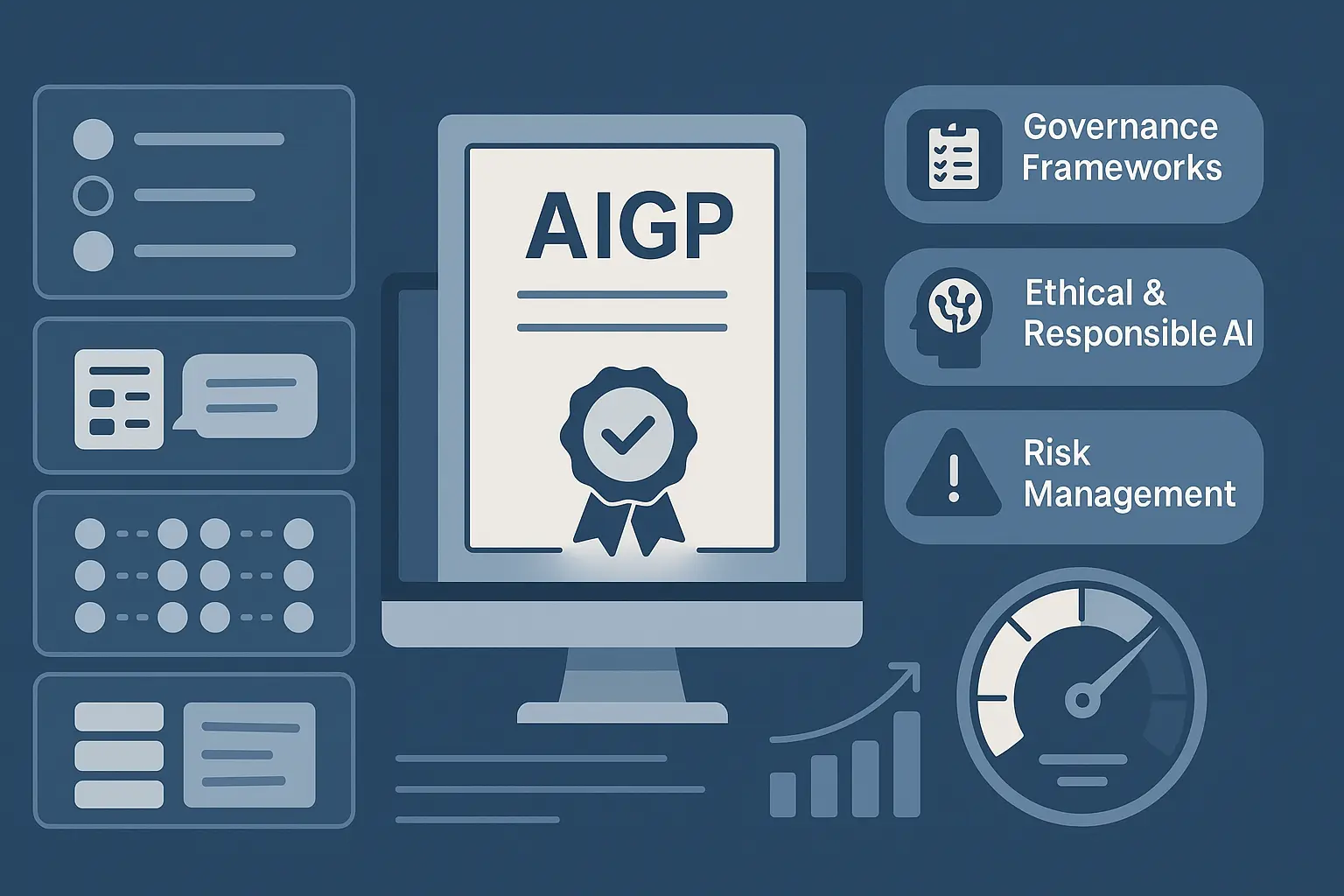
Discover the value of AIGP Certification in AI governance. Learn about exam structure, domains, and scoring to enhance your professional credibility and expertise.

Are you looking to make your mark in the rapidly evolving field of artificial intelligence? If so, the AIGP Certification (Artificial Intelligence Governance Professional) might just be your game-changer. This prestigious credential validates your knowledge and expertise in leading AI projects ethically, legally, and responsibly. Whether you're a project manager, consultant, tech executive, or an AI enthusiast, this certification signals to employers—and yourself—that you’re serious about steering AI in the right direction.In today’s landscape, where AI technologies touch every corner of our lives, understanding how to govern them properly is crucial. And that's exactly where the AIGP Certification comes in.

Why AIGP Certification MattersThe importance of ethical AI governance cannot be overstated. With the explosion of AI applications in business, healthcare, finance, and even entertainment, it’s essential that professionals understand the risks, responsibilities, and regulations that come with deploying these powerful technologies.The AIGP Certification is not just a resume booster—it’s a commitment to leading AI efforts with integrity and foresight. It offers a well-rounded foundation in governance principles, ethical decision-making, and compliance strategy. By earning this certification, you're making a clear statement: you’re ready to guide AI development in a way that benefits society while minimizing harm.

What to Expect in the AIGP ExamOne of the most striking aspects of the AIGP Certification exam is its thoughtful blend of question types. The exam is designed to push your understanding, not just your memory. It challenges candidates to apply their knowledge to real-world scenarios and demonstrate practical insight.Here’s a breakdown of the formats you’ll encounter:

Multiple-Choice Questions

These test your knowledge of fundamental concepts, definitions, and theories. You'll need to identify the best answer from a list of four choices. It's straightforward but essential for testing your conceptual base.

Scenario-Based Questions

You’ll be presented with a case study or story and asked to analyze it. These questions simulate real-world ethical dilemmas or governance challenges and evaluate how well you can navigate complex situations.

Matching Questions

In this section, you’ll pair terms with their correct definitions. Think of it as a test of your vocabulary and conceptual clarity within the AI governance ecosystem.

Drag-and-Drop Tasks

These interactive questions allow you to organize components into the correct sequence—such as placing policy steps in the proper order within an AI lifecycle. It's a test of your procedural knowledge.

Domains Covered in the AIGP Certification

To succeed in the AIGP Certification, it’s important to master three critical domains. Each one covers a specific aspect of AI governance, and understanding them thoroughly will prepare you for the exam and your career.

1. Governance Frameworks and Policies

This domain focuses on the structural and organizational aspects of AI oversight. You’ll learn about:

  • Industry standards like ISO/IEC 42001

  • Frameworks tailored to specific industries

  • Crafting internal policies for AI development and deployment
     This area teaches you how to implement strong guardrails that align with corporate and societal values.

2. Ethical and Responsible AI

Ethics isn’t just a buzzword—it’s a cornerstone of responsible AI. In this section, you'll explore:

  • Bias detection and mitigation

  • Fairness and transparency in AI algorithms

  • Accountability mechanisms for decisions made by AI
     Questions may ask how to explain AI results to stakeholders who don’t have a technical background or how to correct for unintentional bias in datasets.

3. Risk Management and Compliance

Every AI project has risks, and this domain teaches you how to spot and manage them. Key topics include:

  • Identifying and classifying risk levels

  • Understanding legal implications such as data privacy laws

  • Applying risk-assessment frameworks to real-world AI projects

How the AIGP Certification Exam Is ScoredThe exam for AIGP Certification consists of 60 questions, covering all the domains discussed above. To pass, you need a score of 65% or higher, which translates to getting at least 39 questions correct.Here’s how domain weighting usually breaks down:

  • Ethical and Responsible AI: 40%

  • Governance Frameworks and Policies: 30%

  • Risk Management and Compliance: 30%

Please note that the exact weighting may vary slightly depending on the version of the exam, so always refer to the official AIGP study guide for the most current details.

Training and Preparation for AIGP Certification

While self-study is an option, many candidates opt for professional training programs. Institutions like DCDC Training in New York offer structured learning paths to help you prepare thoroughly. These courses cover each domain in depth and often include practice exams, instructor feedback, and hands-on projects to cement your knowledge.These preparatory courses can be particularly beneficial for professionals already working in data center operations, cybersecurity, or AI project management, as they align closely with governance principles.

Career Benefits of Earning AIGP Certification

Adding the AIGP Certification to your professional profile opens doors to a wide range of career opportunities. From AI policy advisor roles to compliance leadership and AI project management, the credential signals to employers that you’re a forward-thinking, responsible professional.Benefits include:

  • Enhanced credibility and reputation in the AI space

  • Increased salary potential for governance-related roles

  • Access to leadership positions in ethics, compliance, and risk

  • A deeper understanding of AI systems from both a technical and ethical perspective

Final Thoughts

If you’re ready to make a significant impact in the world of AI, the AIGP Certification is a strategic step forward. This credential is more than just an exam—it’s a professional commitment to shaping a future where AI technologies serve humanity responsibly.From understanding regulatory frameworks to tackling ethical dilemmas, this certification equips you with the tools and mindset to lead AI initiatives with confidence and integrity. Whether you’re just starting out or looking to pivot into AI governance, now is the time to invest in your career and stand out with the AIGP Certification.


AWS Certified Developer Associate

In today’s tech-driven world, cloud computing has become the backbone of modern businesses. Among the leading cloud service providers, Amazon Web Services (AWS) stands out as a dominant force. If you're looking to advance your career in cloud development, earning the AWS Certified Developer Associate certification is a game-changer. This certification validates your expertise in developing and maintaining AWS-based applications, making you a valuable asset to any organization. In this blog, we’ll explore everything you need to know about the AWS Certified Developer Associate certification, from exam details to preparation tips and career benefits.

What is the AWS Certified Developer Associate Certification?

The AWS Certified Developer Associate certification is designed for individuals who have experience developing and maintaining applications on the AWS platform. It validates your ability to:

  • Write code that optimizes AWS application performance.

  • Debug and troubleshoot AWS applications.

  • Implement security best practices in AWS environments.

  • Use AWS services like AWS Lambda, Amazon S3, and DynamoDB effectively.

This certification is ideal for software developers, cloud engineers, and IT professionals looking to specialize in AWS development.

Why Should You Become an AWS Certified Developer Associate?

  1. High Demand for AWS Skills: AWS is the leading cloud platform, and businesses worldwide are seeking professionals with AWS expertise. Becoming certified sets you apart in a competitive job market.

  2. Career Growth and Higher Salaries: AWS-certified professionals often earn higher salaries compared to their non-certified peers. According to recent surveys, AWS certifications are among the highest-paying IT certifications.

  3. Enhanced Credibility: The certification demonstrates your commitment to professional growth and validates your technical skills to employers.

  4. Access to AWS Resources: As a certified professional, you gain access to exclusive AWS resources, including training materials, webinars, and networking opportunities.

AWS Certified Developer Associate Exam Overview

Before diving into preparation, it’s essential to understand the exam structure:

  • Exam Format: Multiple-choice and multiple-response questions.

  • Duration: 130 minutes.

  • Cost: $150 USD.

  • Passing Score: Approximately 720 out of 1000.

  • Prerequisites: While not mandatory, AWS recommends at least one year of hands-on experience with AWS services.

Key Topics Covered:

  1. AWS Fundamentals: Understanding core AWS services, architecture, and pricing models.

  2. Development with AWS Services: Proficiency in using AWS SDKs, CLI, and APIs.

  3. Security Best Practices: Implementing IAM roles, encryption, and secure coding practices.

  4. Deployment and Debugging: Using AWS Elastic Beanstalk, CloudFormation, and CloudWatch.

  5. Application Optimization: Leveraging AWS Lambda, DynamoDB, and S3 for scalable and efficient applications.

How to Prepare for the AWS Certified Developer Associate Exam

  1. Understand the Exam Guide: Start by reviewing the official AWS Certified Developer Associate exam guide. It outlines the topics and skills you need to focus on.

  2. Hands-On Practice: AWS emphasizes practical knowledge. Set up a free-tier AWS account and practice building, deploying, and debugging applications.

  3. Enroll in Training Courses: Platforms like AWS Training, A Cloud Guru, and Udemy offer comprehensive courses tailored to the exam.

  4. Use Study Materials: Invest in study guides, practice exams, and flashcards. Books like "AWS Certified Developer Associate Study Guide" are highly recommended.

  5. Join Study Groups: Engage with online communities like Reddit’s r/AWSCertifications or LinkedIn groups to share resources and tips.

  6. Take Practice Exams: Simulate the exam environment with practice tests. This helps you identify weak areas and build confidence.

Tips for Passing the AWS Certified Developer Associate Exam

  1. Focus on Key Services: Prioritize understanding core services like AWS Lambda, DynamoDB, S3, and IAM.

  2. Time Management: Practice answering questions within the allotted time to avoid rushing during the exam.

  3. Read Questions Carefully: Pay attention to keywords like "most," "least," and "best" to choose the correct answer.

  4. Review Incorrect Answers: After practice exams, review your mistakes to avoid repeating them.

Career Benefits of Being an AWS Certified Developer Associate

  1. Increased Job Opportunities: Companies across industries are migrating to AWS, creating a high demand for certified developers.

  2. Higher Earning Potential: AWS-certified professionals often earn 20-30% more than their non-certified peers.

  3. Global Recognition: AWS certifications are recognized worldwide, opening doors to international job opportunities.

  4. Skill Validation: The certification proves your ability to design, deploy, and manage AWS applications, boosting your credibility.

Conclusion

Becoming an AWS Certified Developer Associate is a strategic move for anyone looking to advance their career in cloud development. This certification not only validates your technical skills but also opens doors to lucrative job opportunities and career growth. By following the tips and resources outlined in this guide, you can confidently prepare for the exam and take the next step in your professional journey. Start your preparation today and unlock the full potential of AWS in your career!

I BUILT MY SITE FOR FREE USING
